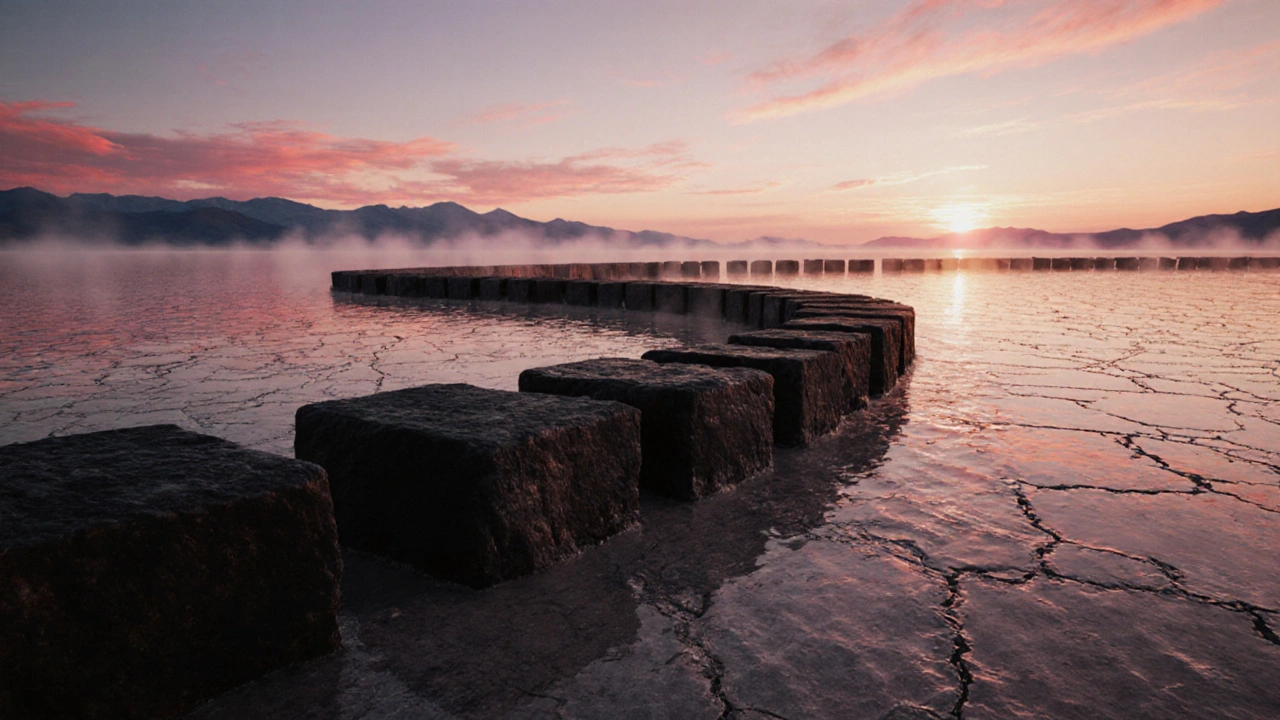
Temporary Art: ephemeral works that challenge what art can be
When we think of art, we often picture paintings in museums or statues in plazas—things built to last. But temporary art, art designed to exist only briefly before disappearing. Also known as ephemeral art, it doesn’t aim to be preserved—it aims to be felt, witnessed, and remembered. This isn’t art that fades because it’s forgotten. It’s art that disappears because it was never meant to stay.
Temporary art shows up in unexpected places: a sand sculpture washed away by tide, a chalk drawing erased by rain, a performance that ends when the last note fades. It’s closely tied to land art, art made directly in nature using natural materials, like Robert Smithson’s Spiral Jetty or Andy Goldsworthy’s ice and leaf arrangements. These works don’t just sit in the landscape—they become part of it, changing with weather, time, and season. Then, they vanish. That’s not a flaw. It’s the point.
It’s also found in performance art, live actions by artists that exist only in the moment, like Marina Abramović’s silent stares or Yoko Ono’s audience-participation pieces. And in installation art, immersive environments built for a single exhibition—structures made of paper, fabric, or light that get torn down after the show closes. These aren’t just artworks. They’re experiences. Moments you can’t buy, own, or hang on a wall. You can only be there for them.
Why does this matter? Because temporary art forces us to pay attention. In a world full of digital content that scrolls past in seconds, these works demand presence. They remind us that beauty doesn’t need to be permanent to be powerful. They turn time into a medium. They turn impermanence into a statement.
You’ll find here a collection of posts that explore how artists use nature, movement, and time to create art that won’t outlive the viewer. From earthworks carved into deserts to street performances that vanish with the night, these pieces aren’t about legacy—they’re about now. And that’s exactly why they stick with you.