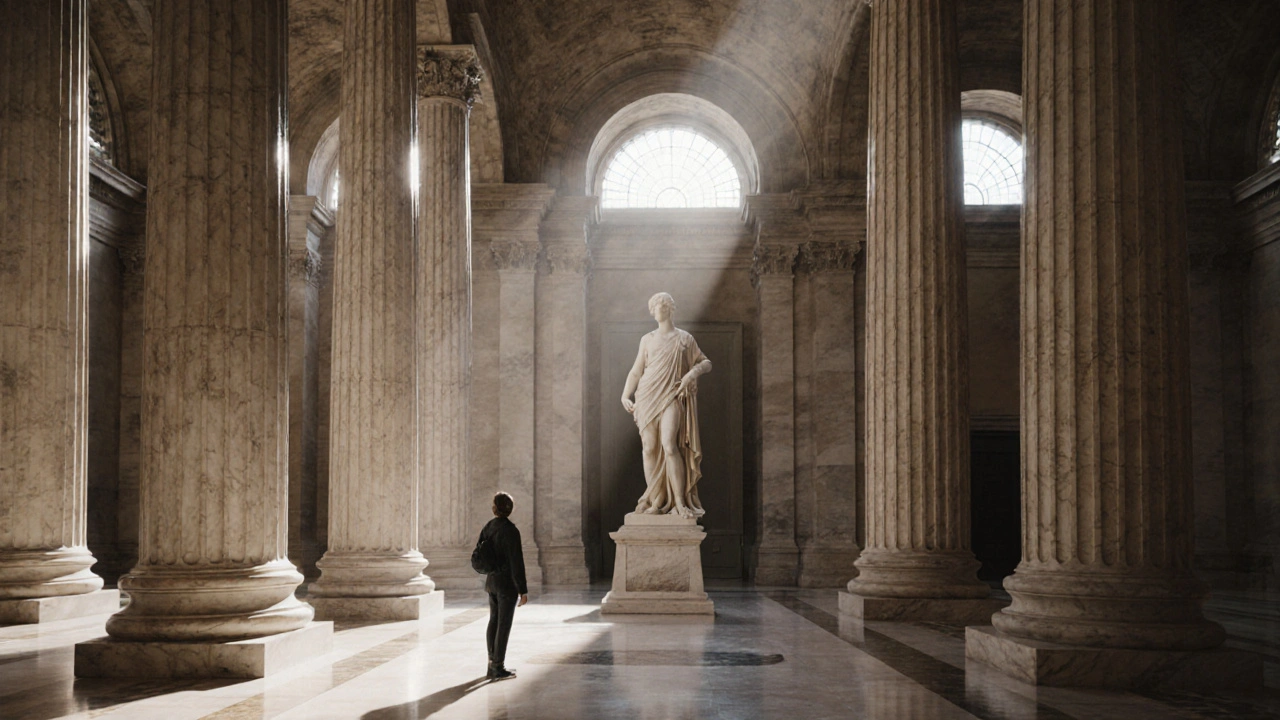
Neoclassical Architecture: The Return of Classical Beauty in Modern Design
When you see a building with tall columns, a triangular pediment, and perfect symmetry, you’re likely looking at neoclassical architecture, a style that revived the forms of ancient Greece and Rome in the 18th and 19th centuries, reacting against ornate Baroque and Rococo excesses. Also known as Greek revival, it wasn’t just about looking old—it was about saying something new: order, reason, and civic virtue. This wasn’t decoration for decoration’s sake. It was a visual language for democracy, used in courthouses, banks, and capitols to signal stability and timeless values.
Neoclassical architecture doesn’t just borrow from the past—it builds on principles that still work today. Think about the classical architecture, the foundational system of proportion, balance, and harmony developed by the ancient Greeks and Romans. Neoclassical designers didn’t copy them—they studied their math. The golden ratio, the use of the Doric, Ionic, and Corinthian orders, the way light falls on a portico—these weren’t random choices. They were deliberate, repeatable formulas for beauty. You’ll find them in the U.S. Capitol, the British Museum, and even in modern courthouses that still use columns to look authoritative.
And it’s not just about buildings. Roman design, the practical, enduring influence of ancient Roman engineering and urban planning, shaped how spaces are laid out: wide boulevards, central plazas, axial symmetry. These ideas show up in city centers around the world, from Washington D.C. to St. Petersburg. Even today, when a government wants to look serious, it builds with stone, columns, and clean lines—not glass and steel.
What makes neoclassical architecture stand out isn’t just its look—it’s how it connects to bigger ideas. It emerged when people were rethinking power, freedom, and knowledge. The same century that gave us the American and French Revolutions also gave us buildings that looked like temples of reason. That’s why you’ll still see it in universities, libraries, and museums: places meant to house ideas, not just stuff.
What you’ll find in the posts below isn’t just history. It’s how these same principles—balance, proportion, restraint—show up in modern art, design, and even film. You’ll see how neoclassical architecture didn’t die; it got absorbed into the DNA of how we make things that feel permanent, meaningful, and beautiful.