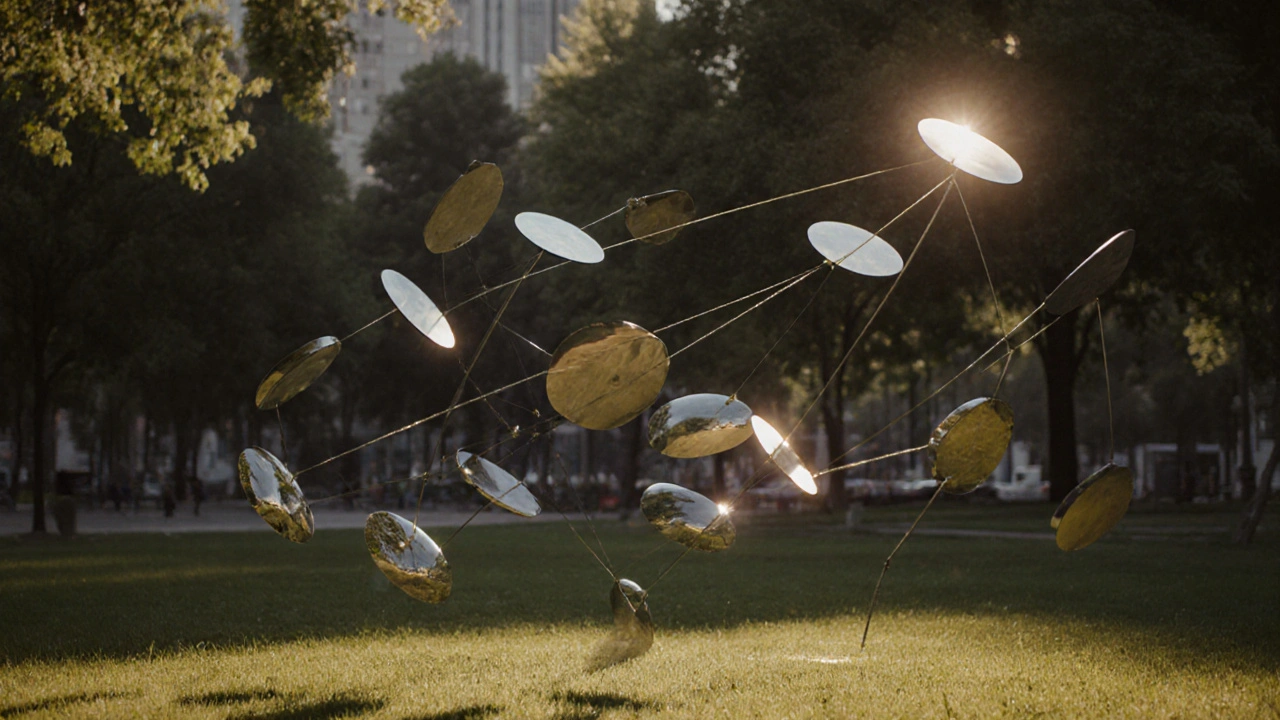
Moving Sculpture: Dynamic Art That Changes With Time and Space
When you think of sculpture, you probably picture something still—stone, bronze, or wood frozen in time. But moving sculpture, a form of art where physical movement is central to the experience. Also known as kinetic art, it doesn’t just sit there—it breathes, spins, sways, or shifts with air, water, or motors. This isn’t just decoration. It’s art that demands you watch, wait, and return. A piece that looks like a simple metal rod at first glance might twist into a spiral when the wind picks up, or glow differently as the sun moves across the sky. You don’t just see it—you experience it over time.
What makes kinetic art, art that relies on motion as a core element, often powered by natural forces or machinery. Also known as moving sculpture, it different from traditional sculpture isn’t just the movement—it’s the relationship between the object and its environment. Some pieces use gravity, like Alexander Calder’s famous mobiles, where balance and airflow create unpredictable rhythms. Others use motors, magnets, or even your own movement to trigger change. Think of a sculpture that only activates when someone walks past it, or one that responds to sound. This isn’t sci-fi—it’s real art, made by artists who treat space and time as their materials.
And it’s not just about mechanics. interactive art, art that requires viewer participation to complete its meaning or motion. Also known as participatory sculpture, it turns you from a spectator into a co-creator. A moving sculpture might change color when you clap, slow down when you stand still, or spin faster when you move closer. It’s art that talks back. This ties into modern trends in public installations, where cities use kinetic pieces to make urban spaces feel alive. You’ll find these in plazas, museums, and even transit stations—designed to stop people in their tracks, not just decorate them.
Behind every moving sculpture is a blend of engineering and emotion. Artists don’t just shape metal—they design rhythm, tension, and surprise. Some use recycled parts, others fine-tuned motors. Some pieces are quiet and subtle; others roar and clank. But they all share one thing: they refuse to stay still. That’s why they stick with you. You don’t just remember the shape—you remember how it felt to watch it move, how the light changed as it turned, how you leaned in to see what came next.
The collection below dives into the artists, movements, and ideas that brought moving sculpture into the spotlight. You’ll find how it connects to Bauhaus design, how it grew from Constructivist ideals, and how today’s creators are pushing it further with tech and nature. Whether you’re curious about how a sculpture moves, why it matters, or how to spot one in the wild—this is your guide.