Classical Revival: How Ancient Beauty Shapes Modern Art
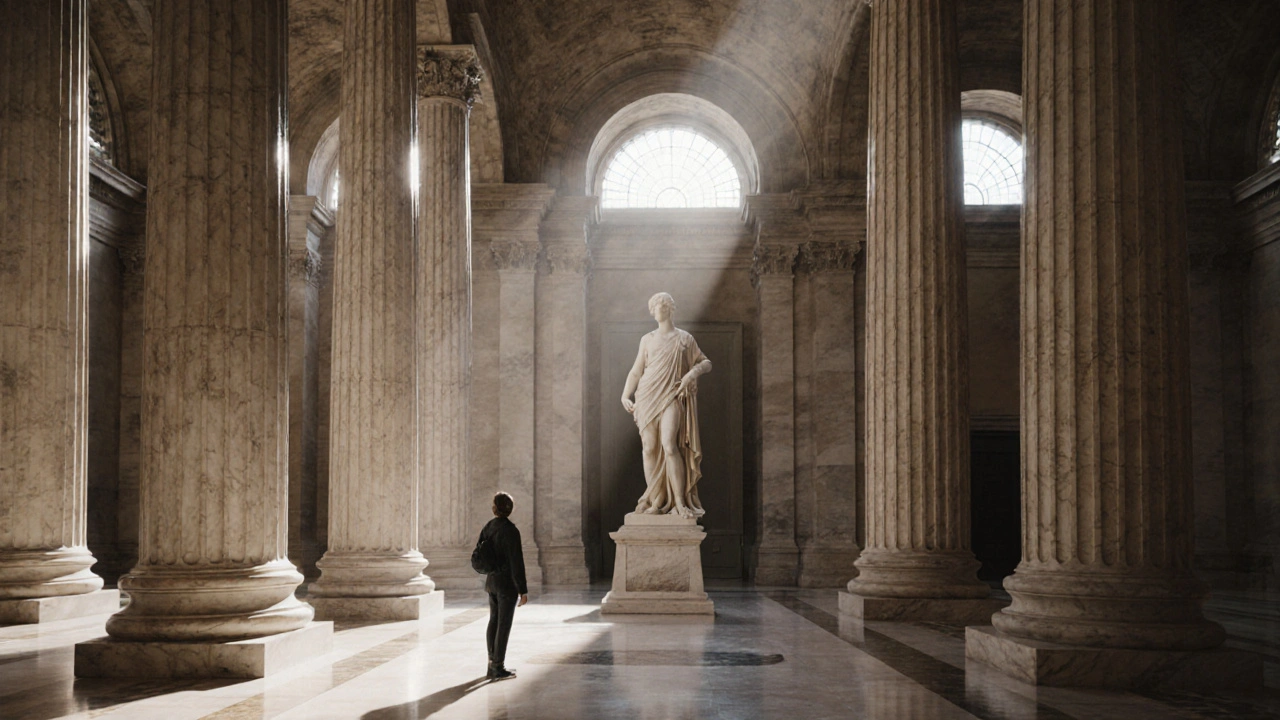
When you see a building with columns, a painting with calm symmetry, or a statue that looks like it stepped out of ancient Greece—you’re looking at the classical revival, a recurring movement that brings back the ideals of ancient Greek and Roman art to inspire new work. Also known as neoclassicism, it’s not just about copying old styles—it’s about rediscovering what makes art feel enduring, rational, and deeply human. This isn’t a relic of the past. It’s alive in museums, city halls, and even movie sets today.
Classical revival doesn’t happen by accident. It shows up when people want order after chaos—after wars, revolutions, or wild artistic experiments. In the 1700s, as the flashy drama of the Baroque faded, artists turned back to the quiet power of classicism, a set of principles focused on balance, harmony, and restraint in form. This wasn’t nostalgia. It was a rebellion against excess. Think of Jacques-Louis David’s sharp, clean paintings—figures posed like statues, backgrounds stripped bare. That was the classical revival speaking. And it didn’t stop there. The Renaissance art, the 15th-century rebirth of classical ideals that laid the foundation for modern Western art. Also known as Renaissance humanism, it showed how ancient philosophy could fuel new creativity. Later, in the 1800s and beyond, sculptors and architects kept pulling from Greek sculpture, the original source of proportion, idealized anatomy, and emotional control in three-dimensional form. Even today, you’ll see its echo in everything from presidential monuments to luxury brand logos.
What makes classical revival so powerful isn’t just its look—it’s its logic. It asks: What lasts? What feels true? Why do some shapes calm us, while others overwhelm? The posts here don’t just show you examples—they explain how these principles show up in unexpected places. You’ll find how modern designers still use the golden ratio, how filmmakers borrow Baroque lighting to create drama, and why some contemporary artists deliberately reject modern chaos to return to ancient calm. This isn’t about copying history. It’s about understanding why certain ideas keep coming back—and how they still shape what we find beautiful.