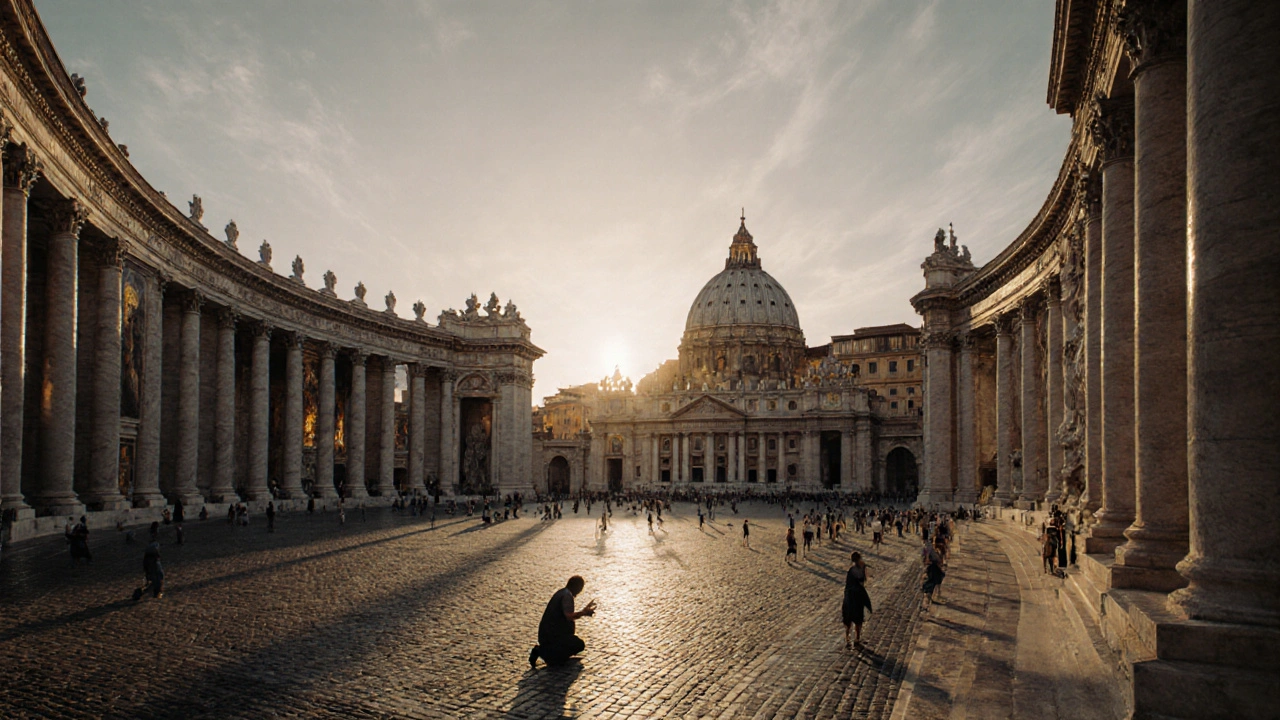
Baroque Style: Drama, Light, and Detail in Art and Film
When you think of Baroque style, a highly ornate and dramatic artistic movement that exploded across Europe in the 17th century, characterized by intense emotion, rich detail, and powerful contrasts of light and shadow. Also known as Baroque art, it wasn’t just about decoration—it was about making you feel something, hard and fast. Think of Caravaggio’s paintings where a single beam of light cuts through darkness to highlight a face full of pain or wonder. That’s Baroque. It didn’t whisper. It shouted.
This style didn’t stop at canvas. It moved into churches, palaces, and later, movie sets. Baroque cinema, the use of Baroque visual language in film—think deep shadows, sweeping camera moves, and crowded, emotionally charged scenes. Also known as Baroque visual aesthetics, it’s the reason directors like Terrence Malick and Alejandro Iñárritu feel so immersive—because they’re borrowing from 400-year-old rules of tension and grandeur. You see it in the golden glows of The Revenant, the towering staircases in Barry Lyndon, the way every frame feels like a painted altar. Baroque doesn’t need words. It speaks through texture, contrast, and scale.
It’s not just about looking fancy. Baroque style requires control over light, demands emotional intensity, and thrives on movement. It’s the opposite of minimalism. Where modern design strips away, Baroque piles on—curves, gold, fabric, tears, angels, and stormy skies—all working together to pull you in. You don’t just observe it. You’re caught in it.
What you’ll find below are posts that trace how this wild, glittering, deeply human style shows up today—not just in old museums, but in how films are shot, how scenes are built, and how emotion is staged on screen. From lighting tricks to set designs that feel like they’re pulled from a Rubens painting, these articles show you exactly where Baroque lives now. No theory. No fluff. Just real examples, real films, and real techniques you can see and feel.